
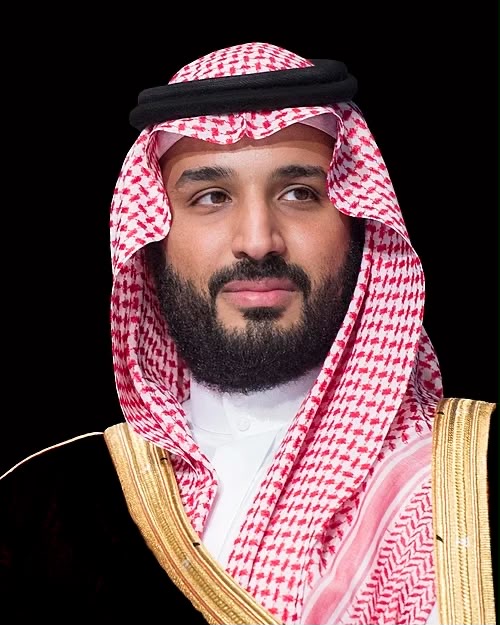

As the Iran war threatens regional stability, Saudi Crown Prince Mohammed bin Salman faces a defining test: protecting his kingdom’s security while pursuing his ambitious vision of economic transformation.
In the world of royalty, power is often communicated through carefully staged appearances, grand palaces and the quiet confidence of those who command influence. But beyond the image, the real test of leadership emerges when a nation finds itself caught in the turbulence of war.
For Mohammed bin Salman, Saudi Arabia’s Crown Prince and Prime Minister, that test is becoming increasingly difficult to ignore.
Popularly known as MBS, the 41-year-old Saudi leader has become one of the most influential figures in the Middle East. His rise has been accompanied by ambitious economic reforms, sweeping social changes and a determination to reposition Saudi Arabia as a major force in the global economy.
Yet, as conflict involving Iran and its regional adversaries threatens to destabilise the Gulf, the spotlight on the crown prince is no longer just about his personality, wealth or ambitions. It is increasingly about the future of his kingdom and the choices he must make in a region where security and economic prosperity are closely connected.
The Man Behind the Crown
Born on August 31, 1985, Mohammed bin Salman is the son of King Salman bin Abdulaziz Al Saud. He became crown prince in 2017 and subsequently assumed the office of prime minister in 2022.
His emergence marked a significant shift in Saudi Arabia’s leadership and policy direction. Under his influence, the kingdom embarked on an ambitious programme of economic and social transformation, seeking to reduce its dependence on oil and open new opportunities in tourism, entertainment, technology, manufacturing and international investment.
His signature initiative, Vision 2030, reflects this ambition. Launched in 2016, the programme seeks to diversify the Saudi economy, create employment opportunities and establish the kingdom as a more competitive destination for global business.
From entertainment and tourism to major infrastructure developments and international sporting events, Saudi Arabia has sought to project an image of a country looking beyond its traditional economic model.
But transformation on this scale comes with considerable expectations. Investors need confidence, businesses require stability, and ambitious development plans depend on an environment in which people and capital can move with relative certainty.
That is where the regional conflict presents a serious challenge.
A Kingdom in the Shadow of War
Saudi Arabia occupies a strategic position in the Middle East, with enormous importance to global energy markets and international trade. Its geographical location, oil infrastructure and relationship with major world powers make regional security a central concern.
The conflict involving Iran has added new pressure to an already complicated security environment.
Recent attacks attributed to Iran-aligned Houthi forces in Yemen have targeted Saudi infrastructure, including facilities in Riyadh and the energy sector. On October 13, 2026, a reported attack caused a limited fire at the headquarters of Saudi Aramco in Dhahran, according to Reuters. The developments underscore the risks facing the kingdom as the wider conflict intensifies.
For MBS, the challenge is not simply how to respond to immediate security threats. It is how to prevent a regional confrontation from undermining the economic transformation he has placed at the centre of his leadership.
A prolonged conflict could affect investor confidence, disrupt travel and trade, increase pressure on energy infrastructure and force the government to redirect resources towards defence and security.
These are not merely military concerns. They have direct implications for jobs, businesses, public spending and the kingdom’s international standing.
The Price of Vision 2030
Vision 2030 is more than a development programme. It is central to Saudi Arabia’s ambition to prepare for a future in which the global energy landscape, investment patterns and economic opportunities may look very different.
The strategy has encouraged investment in tourism, technology, entertainment, sports and large-scale infrastructure. It has also helped reshape aspects of everyday life in the kingdom.
However, ambitious economic plans require more than financial resources. They depend on confidence in the future.
Regional instability can complicate efforts to attract international investors, encourage tourism and establish Saudi Arabia as a secure destination for major events and business activity.
This creates a difficult balancing act for the crown prince: maintaining national security while ensuring that the kingdom’s long-term development ambitions do not lose momentum.
The question is whether Saudi Arabia can preserve its economic ambitions while navigating a regional crisis that it cannot entirely control.
Between Retaliation and Diplomacy
Saudi Arabia’s relationship with Iran has historically been marked by rivalry, competing regional interests and periods of diplomatic engagement. The two countries restored diplomatic relations in 2023 after years of estrangement, raising hopes that dialogue could help reduce tensions.
The present conflict places that diplomatic progress under considerable strain.
For the Saudi leadership, decisions about military responses, regional partnerships and negotiations carry consequences that extend beyond the kingdom’s borders. Escalation could deepen insecurity, while diplomacy would require difficult calculations about deterrence, trust and national interests.
MBS must therefore navigate a landscape in which every major decision could affect Saudi Arabia’s security, its relationship with international partners and its economic future.
There is no simple choice between strength and restraint. The challenge is determining how best to protect the kingdom without allowing the conflict to become an even greater threat to its long-term interests.
More Than a Royal Image
The fascination with Mohammed bin Salman often centres on his status, public image and extraordinary influence. Yet, in moments of regional crisis, the more important story lies in the responsibilities attached to that power.
The crown prince is attempting to lead a country through a profound transformation while confronting security pressures that could complicate his plans.
His legacy will depend not only on the scale of the projects announced under Vision 2030 or the international attention Saudi Arabia attracts, but also on the kingdom’s ability to withstand instability, sustain economic progress and protect its people.
The Iran conflict may eventually prove to be a turning point in how Saudi Arabia approaches regional security, economic resilience and its relationships with neighbouring states.
For now, the stakes remain high.
The Prince, the War and the Road Ahead
Mohammed bin Salman’s ambitions have helped place Saudi Arabia at the centre of global conversations about investment, energy, tourism and the future of the Middle East.
But the region’s unfolding crisis raises a fundamental question: can the kingdom continue its ambitious transformation while living under the shadow of a widening conflict?
The answer will depend on developments on the battlefield, the choices made by regional leaders and the ability of diplomacy to prevent further escalation.
For MBS, the challenge is to ensure that a war beyond his control does not define the future he has spent years trying to build.
The world will be watching—not simply the prince, but the kingdom, its resilience and the decisions that could shape the Middle East for years to come.
For Bridges 360, the story of the handsome prince and the raging war is ultimately a story about power under pressure, ambition in uncertain times and the high cost of instability.
