
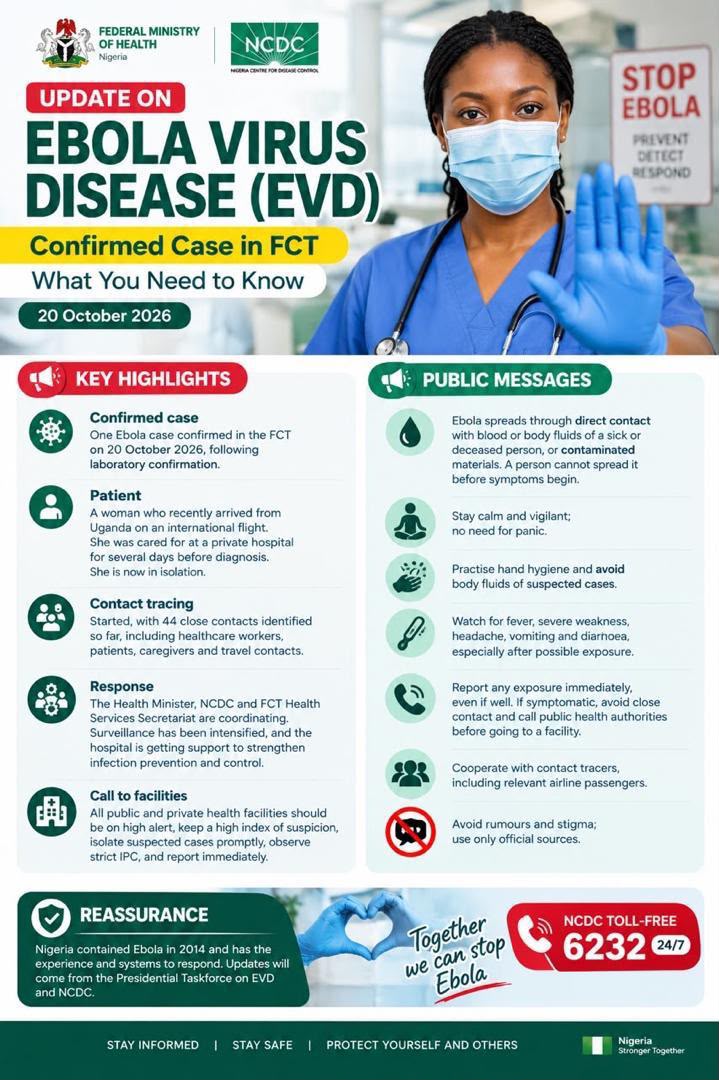

As concerns grow over reports of a suspected or confirmed Ebola case, public health experts urge Nigerians to stay informed, recognise the warning signs and take precautions against possible exposure.
Ebola Virus Disease is a severe and potentially fatal illness that can spread through direct contact with the bodily fluids of an infected person or contaminated objects. Early symptoms may resemble malaria or typhoid, making it important to seek prompt medical attention when symptoms occur alongside a history of possible exposure.
The incubation period ranges from 2 to 21 days after exposure. Knowing how the virus spreads, recognising its symptoms and reporting suspected cases promptly can help protect individuals, families and communities.
Here are the key facts everyone should know.
*Incubation: 2 to 21 days after exposure*
*Early symptoms – look like malaria/typhoid at first:*
– Sudden high fever
– Severe headache
– Muscle and joint pain
– Extreme weakness / fatigue
– Sore throat
*Obvious / Later symptoms – 3-6 days after early signs:*
– Vomiting and severe watery diarrhea
– Stomach pain
– Skin rash
– Red eyes (conjunctivitis)
– Bleeding: from gums, nose, in stool, vomiting blood, bruising easily
– Pain when swallowing, chest pain
– Hiccups in later stage
– Confusion, loss of consciousness
Not everyone bleeds. But, the most consistent signs to watch are sudden fever + weakness + vomiting/diarrhea.
*How it transmits – NOT airborne:*
1. *Direct contact* with blood, vomit, diarrhea, urine, saliva, sweat, breast milk, semen of a sick or dead person with Ebola
2. *Contact with contaminated objects* – needles, bedding, clothes soiled with fluids
3. *Contact with dead bodies* during burial preparation – very high risk
4. *From animals to humans* – contact with blood/bushmeat of infected bats, monkeys, chimpanzees
5. *Sexual transmission* – virus can stay in semen for months after recovery
*How it does NOT spread:*
– Air, water, mosquitoes, casual touching of a healthy person, cooked food.
*What to do if you suspect:*
– Do NOT touch the person with bare hands
– Isolate immediately and call your State Ministry of Health / NCDC hotline: 6232 in Nigeria, or nearest hospital emergency
– Wash hands with soap and running water, or alcohol sanitizer
– Health workers need gloves, gown, mask, eye protection
If you or someone near you has sudden fever after contact with a sick person or after a funeral in the last 21 days, seek medical help urgently and mention the contact history.
*This Information is to Strengthen Awareness Towards Timely Vigilance and Response.*
